
Oils, dressings & sauces
A narrow neck and a suitable pourer help control the serving. Allow for thicker sauces and suspended ingredients when choosing the opening.
BUILT AROUND YOUR PRODUCT
Packaging decisions begin with what goes inside, how it is filled and how your customers will use it.
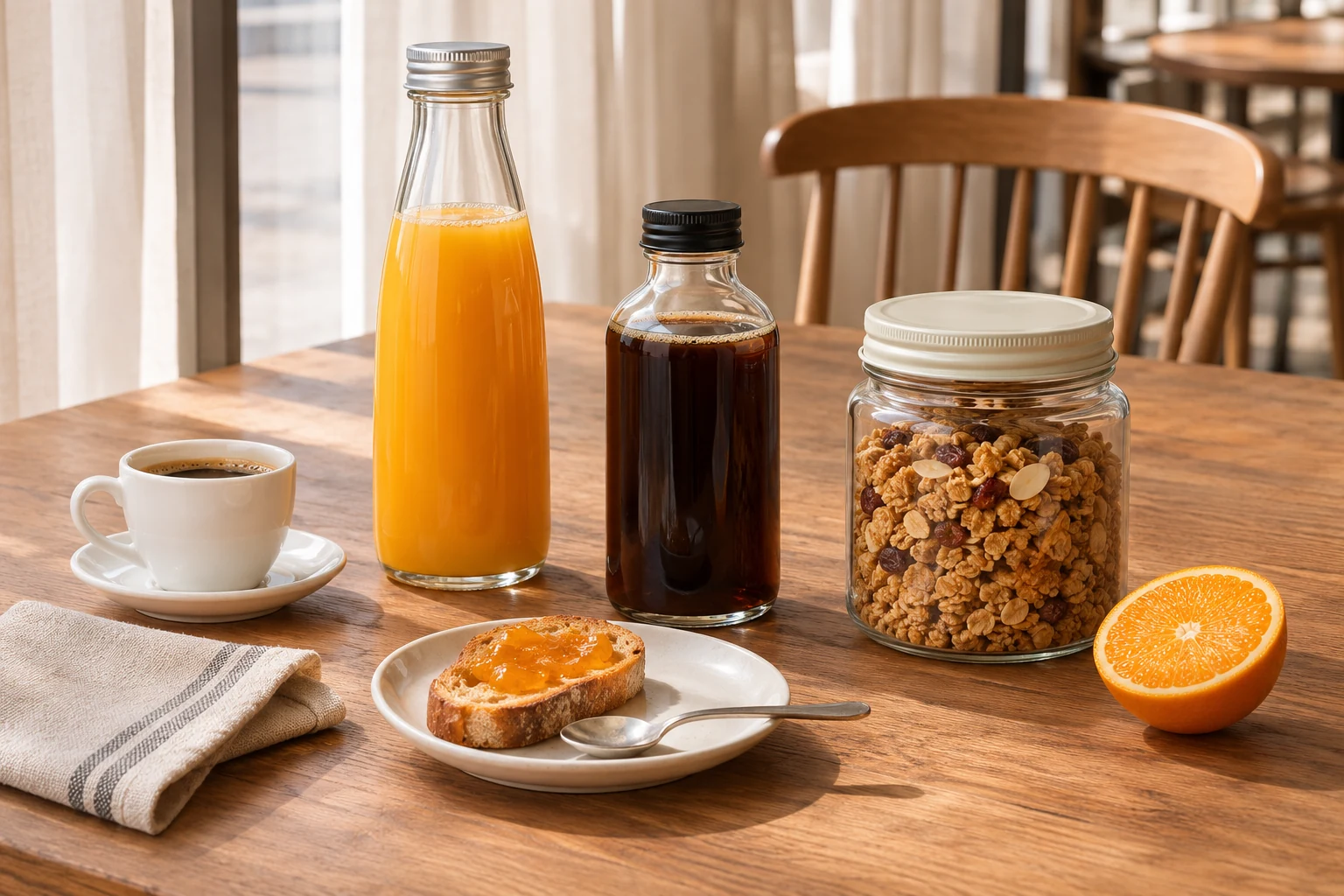
SIX APPLICATIONS. DIFFERENT PRIORITIES.
01 / FOOD & PANTRY
From a controlled drizzle to a generous spoonful, the opening is part of the product experience. Choose around viscosity, particles, filling conditions and the way your customer reaches the last portion.
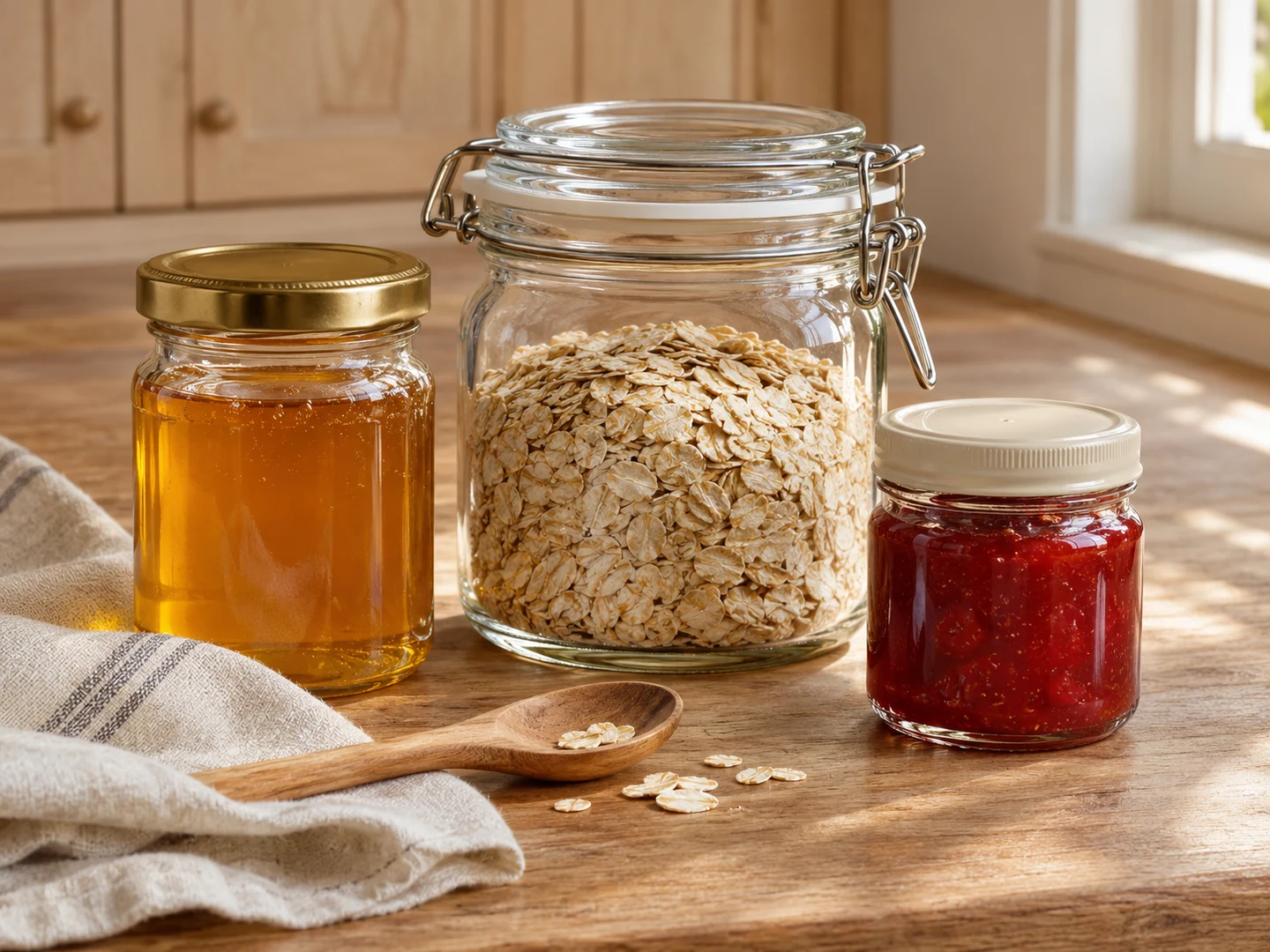
A narrow neck and a suitable pourer help control the serving. Allow for thicker sauces and suspended ingredients when choosing the opening.
A wide opening supports filling and spoon access. Review closure liners, vacuum requirements and your preservation process.
Consider shaker or spoon access, moisture protection and the space needed for a clear product label.
Contents and viscosity • Fill temperature • Preservation process • Opening preference
02 / BEVERAGE & SPIRITS
A café refrigerator, a dining table and a bar ask different things of a bottle. Balance handling and presentation with the actual filling line and opening system.
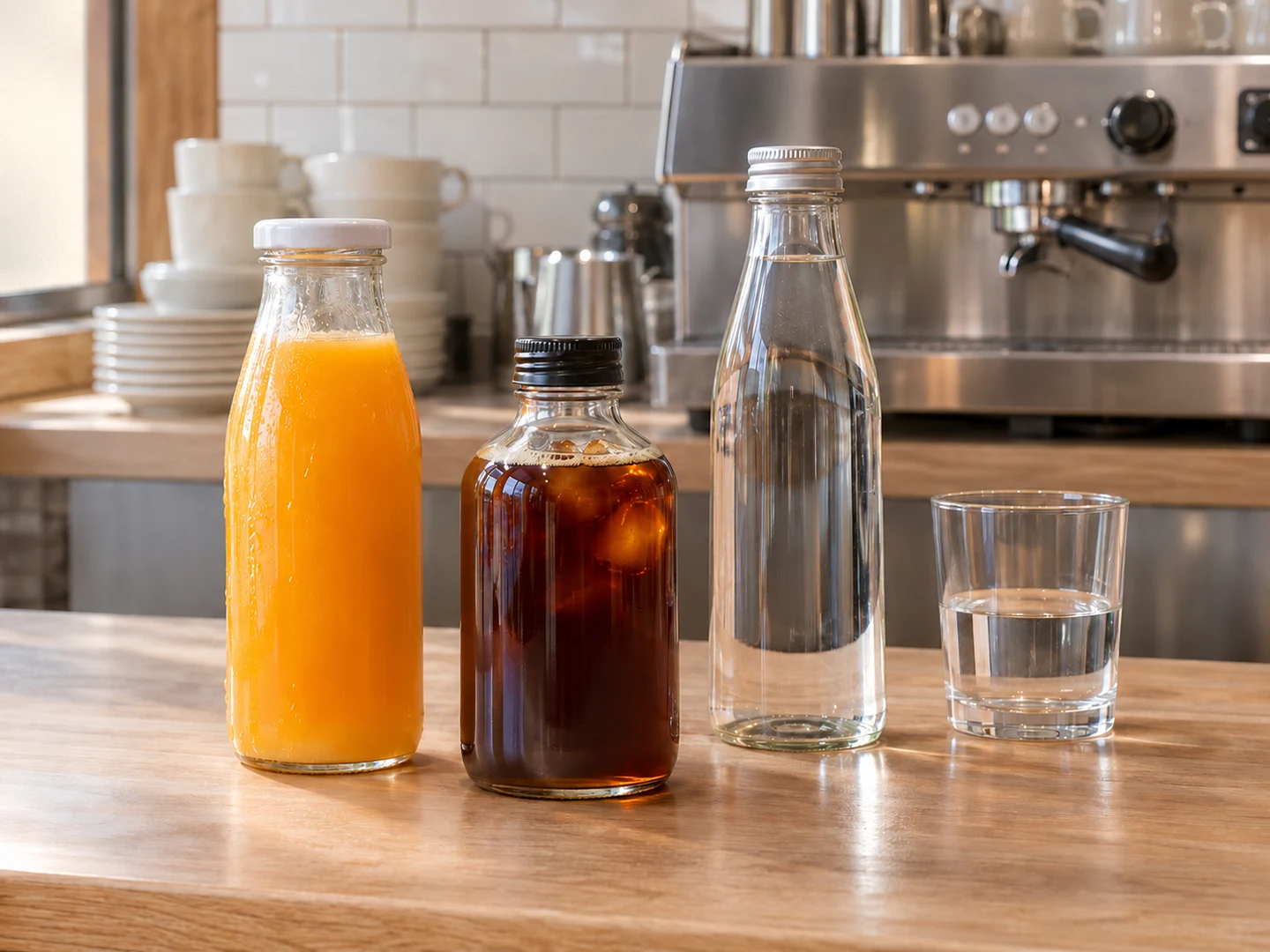
Review fill volume, refrigeration, condensation and label durability. Specify the actual hot-fill or cold-fill conditions.
Choose proportions, glass colour and closure style as one system. Check pour control and how the finished bottle sits on shelf.
Declare carbonation and expected pressure. Qualify the exact bottle and closure for pressure, storage and filling conditions.
Still or pressurised • Filling method • Closure system • Label application
03 / SKINCARE & FRAGRANCE
The right vessel is only half the experience. Dose, priming, reach and repeated use depend on a coordinated dispenser and a formula-tested pack.
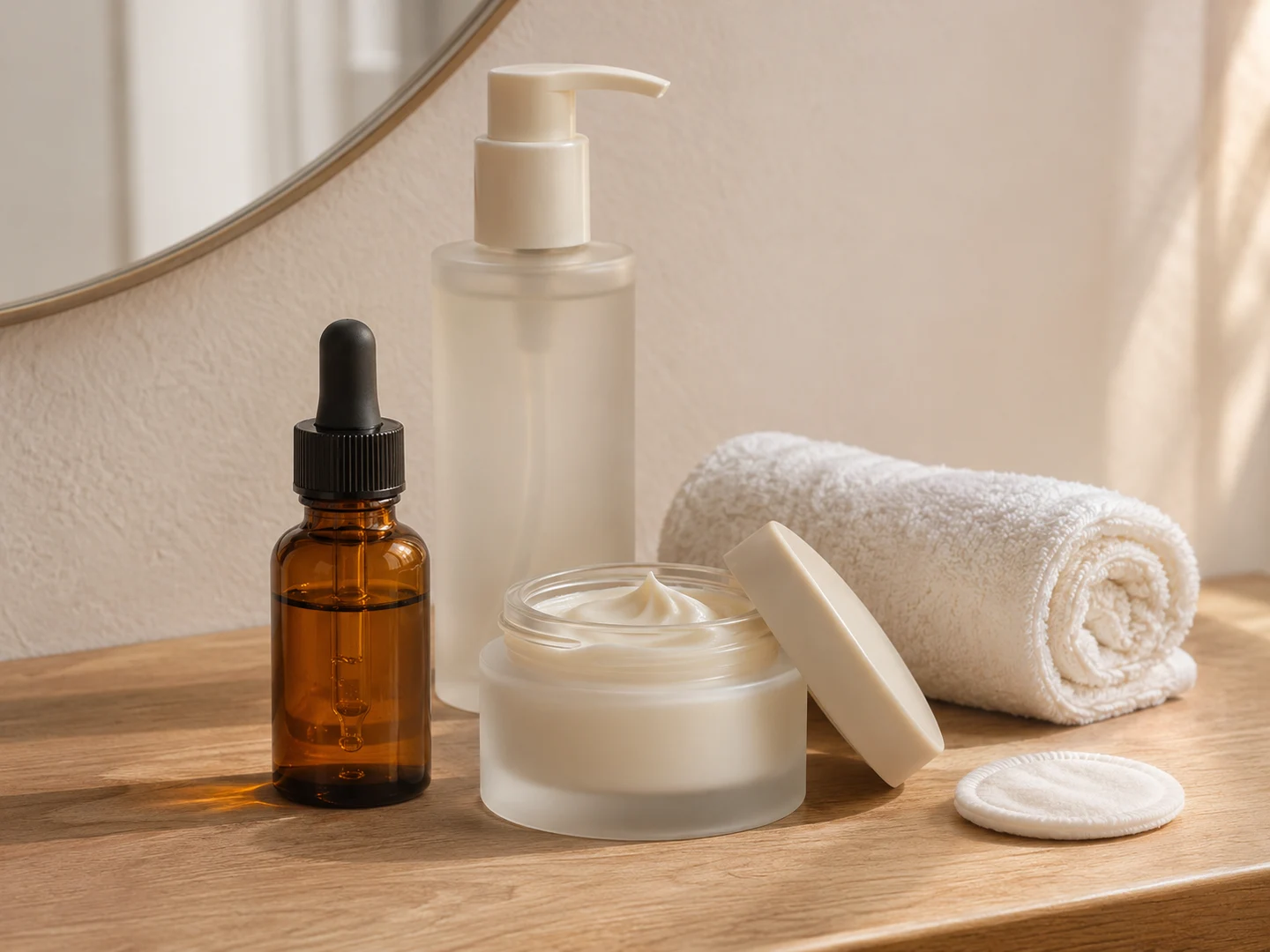
Compare pipette reach, dose control and bulb compatibility. Review light sensitivity with formula stability evidence.
Plan access to the product, liner contact and the required seal. Test compatibility and leakage in the finished pack.
Assess spray pattern, evaporation, crimp or thread fit and decoration exposed to fragrance spills.
Formula type • Viscosity and dose • Dispensing preference • Stability programme
04 / CANDLES & HOME FRAGRANCE
A vessel can become part of a home, but heat, fragrance and everyday handling still govern the specification. Qualify the complete system, not the empty glass alone.

Match vessel geometry to wax, wick and fragrance. Run an appropriate burn-test programme on the finished candle.
Coordinate the opening, insert, reeds and fragrance. Check evaporation, leakage and compatibility with seals and finishes.
Build a consistent colour and closure family. Protect decorated surfaces with a pack-out designed for transport.
Wax or fragrance • Wick or reed system • Finish preferences • Gift and shipping pack
05 / LABORATORY GLASSWARE
A reagent bottle, a beaker and a volumetric vessel have different roles. Start with the procedure, then confirm material and performance requirements for the exact item.
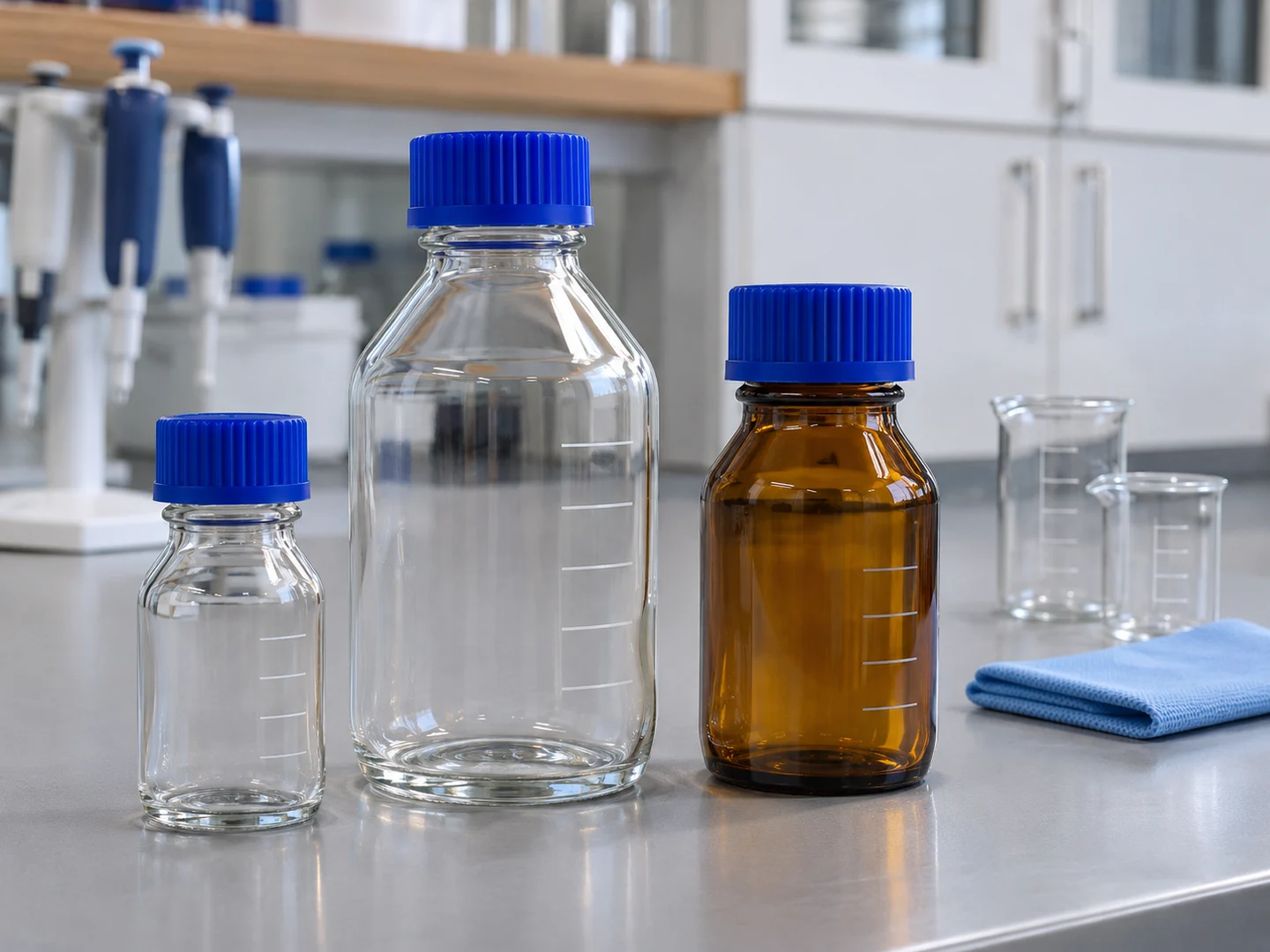
Review chemical compatibility, cap and liner materials, light exposure and the conditions of storage.
Specify working volume, temperature changes and stirring or transfer needs. Do not infer thermal performance from appearance.
State the required accuracy and calibration convention. Confirm whether graduations are indicative or intended for measurement.
Chemical and concentration • Temperature range • Accuracy needs • Cleaning method
06 / MEDICAL & PHARMACEUTICAL
Vials, ampoules and cartridge components begin with a precise technical brief. Container selection and qualification belong within the intended product and quality system.
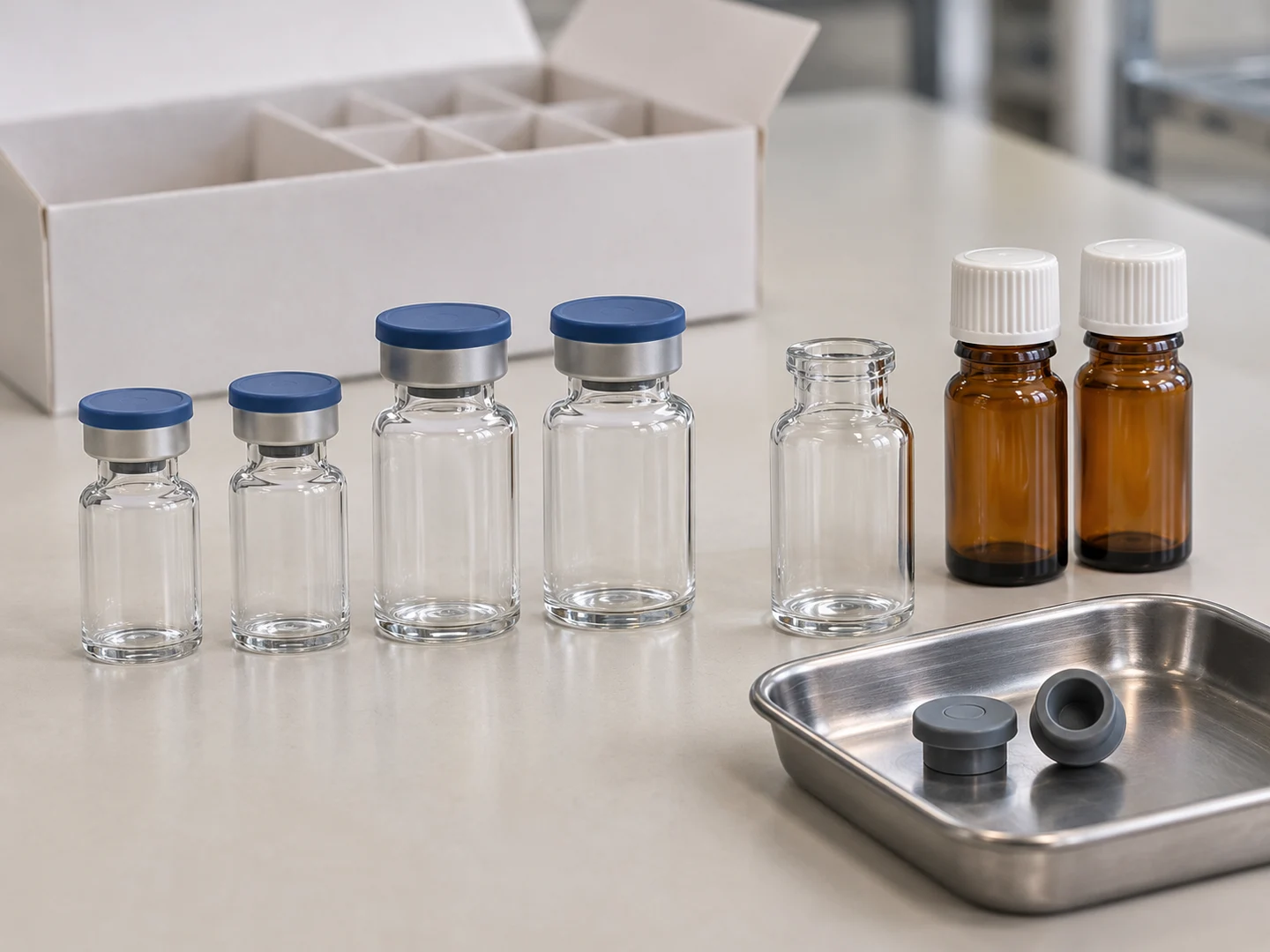
Identify glass type, finish, stopper and seal. Review container-closure integrity and compatibility as a complete system.
Confirm the required drawing, opening system and filling and sealing process. Define appearance and performance criteria.
Coordinate dimensional tolerances and all mating parts with the device and filling requirements.
Intended use • Container drawing • Component system • Qualification and documentation needs
YOUR NEXT CHAPTER, IN GLASS
Share your application, preferred format and target quantity. Start with the details that matter.