
Contents
Describe viscosity, acidity, oils, particles and any sensitivity to light.
WHY IT MATTERS
The formula informs the opening, dispenser and compatibility tests.
THE GLASS PACKAGING BUYING GUIDE
Choose more than a shape. Define the usable fill, match the closure, validate the complete pack and compare quotations on the same commercial basis.
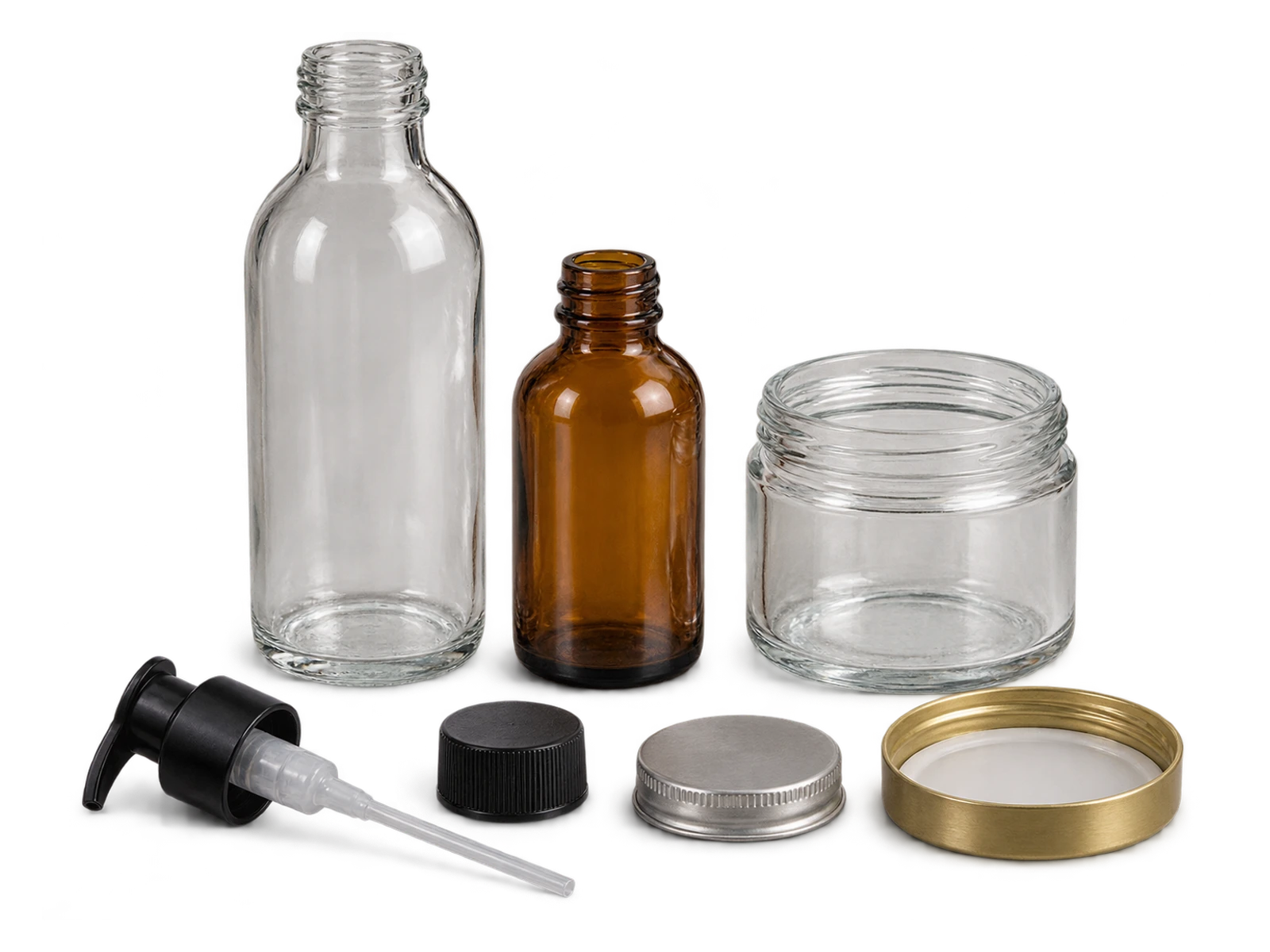
Better specifications. Better purchasing decisions.
01 / BUILD THE BRIEF
A useful specification connects what goes inside with the way it is filled, delivered and used. Resolve these four questions before narrowing the collection.
Describe viscosity, acidity, oils, particles and any sensitivity to light.
The formula informs the opening, dispenser and compatibility tests.
State net fill, filling temperature, headspace and the way the product is measured.
A catalogue capacity is not a confirmed usable fill.
Explain who opens, pours, pumps or scoops, and how often.
Handling and dispensing should suit the person using the pack.
Share filling, capping, labelling and packing equipment requirements.
Confirm clearances and line trials before fixing the format.
Ask for the current drawing and its tolerances. Confirm the final fill with your actual product and closure.
Weight-based fills: fill mass divided by measured product density estimates occupied volume. Use consistent units, then verify the actual fill, aeration, headspace and closure intrusion in a trial.
Heat processing: state fill and initial glass temperatures, holding time, cooling sequence and preservation method. Glass thickness alone does not establish thermal-shock suitability.
Pressure: declare carbonation, fermentation and expected storage conditions. A still-drink bottle is not automatically suitable for a pressurised product.
02 / SPECIFY THE COMPLETE SYSTEM
Bring the neck, closure, liner and dispenser into the same conversation. A matching diameter alone does not establish compatibility.
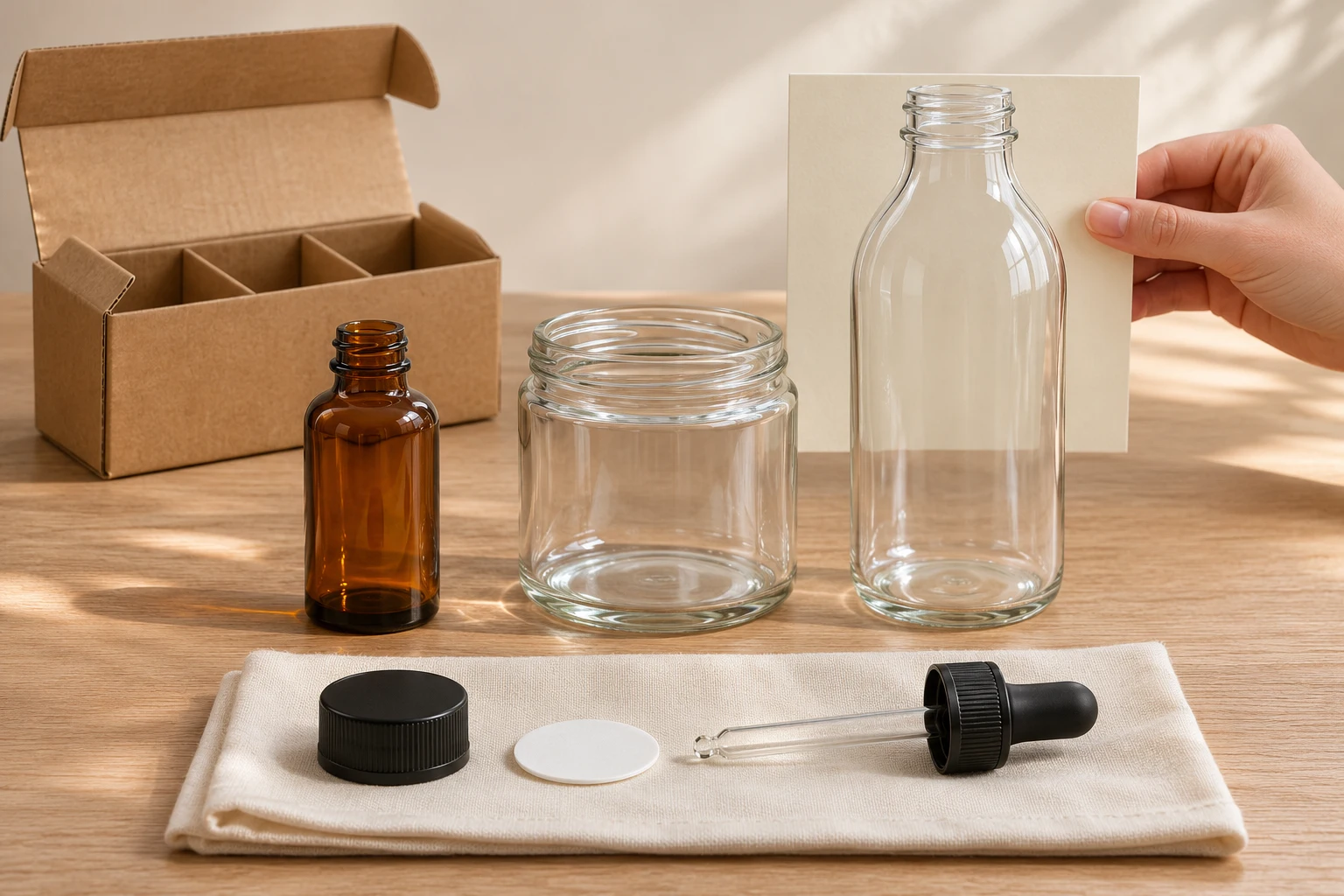
Match the exact neck-finish designation or drawing, thread profile and finish height. Lug, continuous-thread, crimp and stopper systems are not interchangeable.
Name the gasket, liner, insert and any tamper feature. Assess the materials against the contents, filling process and storage conditions.
Review dose, priming, tube or pipette reach, leakage and repeated use. Include all parts in the sample and quotation.
Start with that constraint. Supply the component specification and physical sample, or the line requirements. Check nozzle clearance, bottle handling and capping conditions, then trial the complete pack.
03 / MAKE APPROVAL MEAN SOMETHING
Appearance and performance answer different questions. Agree the sample type, test conditions and acceptance criteria before samples are sent.
KEEP Approved artwork + finish reference
KEEP Test results + final component specification
Identify stock, development or production-representative samples. Record any substituted materials or components. Agree quantities, sample charges, freight and the next approval step.
Link the drawing revision, specifications and retained sample to the order. Agree change control so later substitutions do not bypass approval.
For beauty and fragrance, assess seals, elastomers and metal parts, evaporation, repeat dispensing and decoration exposed to spills. Light-sensitive formulas need appropriate transmission and stability evidence, not just dark-looking glass.
Candle vessels, laboratory glass and pharmaceutical components require application-specific qualification. Do not transfer food or cosmetic assumptions to those uses.
Photos help establish direction but cannot confirm colour, texture, fit, seal or compatibility. Use physical samples and appropriate testing.
A heavier bottle is not automatically stronger or suitable for heat or pressure. Container geometry, glass distribution, manufacture, handling and the intended process all matter.
Record the item and drawing revision, dimensions and tolerances, label area, sealing surface, fill conditions and all components. Include test methods, results, accepted cosmetic limits, retained sample identification and the person authorising each approval.
04 / COMPARE LIKE WITH LIKE
Send the same specification, variant quantities and delivery basis to each supplier. Separate recurring costs from the work needed to start the project.
Glass, closure, liner, dispenser, decoration and packing.
Is every part included in the unit price?
Minimums by size, glass colour, artwork and closure variant.
Can variants be mixed, and what overrun or underrun is allowed?
Samples, moulds, print screens, plates and other setup.
Who owns the tooling, and how is future use managed?
Currency, taxes, validity, unit basis and payment milestones.
What is due at approval, production and dispatch?
Artwork, sampling, tooling, production, inspection and freight.
Which approvals, payments or parts start the production clock?
05 / FROM FACTORY TO RECEIVING TEAM
For a China-to-Philippines order, confirm the named port or delivery place and the trade term. Identify who arranges each stage, who pays and where responsibility transfers.

Include the costs needed to get the agreed pack to your receiving point. Treat one-time development charges consistently when comparing a first order with a repeat order.
Confirm carton dimensions, gross weight, pallet details and packing configuration before freight is calculated.
Packing specification, lot identification, inspection records and dispatch readiness.
Origin handling, export formalities, main freight and insurance scope.
Duties, taxes, brokerage and destination handling, confirmed with your import specialist.
Local transport, unloading, site access and storage conditions at the receiving point.
Confirm invoice, packing list and required shipping documents before dispatch. Agree how damage and quality issues must be reported, including the reporting window.
On arrival, record carton and pallet condition before unpacking. Reconcile quantities and references, inspect against the acceptance plan, and retain lot identification, photographs and packaging for any issue.
YOUR NEXT STEP / A QUOTABLE BRIEF
Start with what you know. Mark the details you have ready and identify the decisions still open. This checklist stays on this page and sends nothing.
YOUR NEXT CHAPTER, IN GLASS
Share your application, preferred format and target quantity. Start with the details that matter.